The Case for Integrated Water and Power Plant (IWPP) Desalination as National Priority Infrastructure
By
The Prince and Princess Charles Offokaja Foundation
An International Development Think Tank
March 2026
Executive Summary
Bottom Line: Nigeria’s water security and power stability cannot be achieved through conventional freshwater sources and a fragmented grid. The 90% depletion of Lake Chad and the accelerating salinization of coastal aquifers constitute a national emergency. This moment demands an immediate, scalable, and dual-purpose infrastructure response.
Proposal: The Offokaja Foundation recommends the immediate deployment of Integrated Water and Power Plants (IWPP) — also termed Independent Water and Power Plants—along Nigeria’s 853 km Atlantic coastline. These are single-infrastructure facilities delivering dual output: 85–95% of generated electricity is dispatched to the national grid, while the remaining 5–15% drives large-scale seawater desalination through captured waste heat.
Strategic Outcome:
· A National Water Backbone pipeline system delivering potable water to every state.
· Stabilized grid power for homes, hospitals, factories, and farms.
· A strategic, engineered mechanism to reverse the ecological collapse of Lake Chad.
Financing Framework: BOOT (Build-Own-Operate-Transfer).
Private capital mobilized through Public-Private Partnerships, secured by redirecting currently flared natural gas as a low-cost fuel input.
Immediate Call to Action: Inclusion in the 2027 National Budget. Establishment of a National Desalination Authority. Commencement of pilot projects in coastal states by the fourth quarter of 2027.
1. The Crisis: A Convergence of Water and Power Failure
Nigeria faces a dual infrastructural deficit that conventional approaches have failed to arrest. The numbers tell a stark story, but behind them are millions of daily struggles—children walking miles for water, businesses shuttered by blackouts, and farmers watching their land turn to dust.
Drinking Water Access
Over 60 million Nigerians lack access to safely managed drinking water. This number will climb as the population approaches a projected 400 million by 2050. Climate variability and pollution of rivers and lakes are rendering traditional sources increasingly unreliable.
Electricity Reliability
Chronic power outages persist nationwide. The economic drag is substantial—estimated at 2–4% of GDP annually —but the human cost is immeasurable. Students study in darkness. Hospitals rely on diesel generators. Small enterprises operate at a perpetual disadvantage.
Lake Chad
The lake’s surface area has contracted by up to 90% since the 1960s. This is not merely an environmental statistic. It is a security crisis, a food crisis, and a humanitarian crisis affecting millions across the Lake Chad Basin.
Groundwater Integrity
The nation’s underground reserves are failing in region-specific ways:
· South: Saline intrusion has rendered boreholes inoperative in major population centers including Lekki and Apapa in Lagos State; and Bonny, and Port Harcourt in Rivers State.
. Fracture Dependency in Both Northern and Southern Zones: In Enugu State, Obudu in Cross River State, and Plateau State, the geology is fracture-dependent. A driller who misses a specific rock fracture by even a few metres drills a dry hole. This makes reliable groundwater extraction exceptionally difficult and expensive.
· North: Desertification causes seasonal failure of shallow wells and hand-dug sources, forcing communities onto distant and often unsafe alternatives.
The Critical Gap
Despite years of announcements and feasibility studies, Nigeria currently operates zero large-scale public desalination plants or IWPPs. The nation remains almost exclusively dependent on increasingly stressed and unreliable conventional sources. This is the gap this proposal seeks to close.
2. The Proposed Solution: Integrated Water and Power Plants (IWPP)
Definition
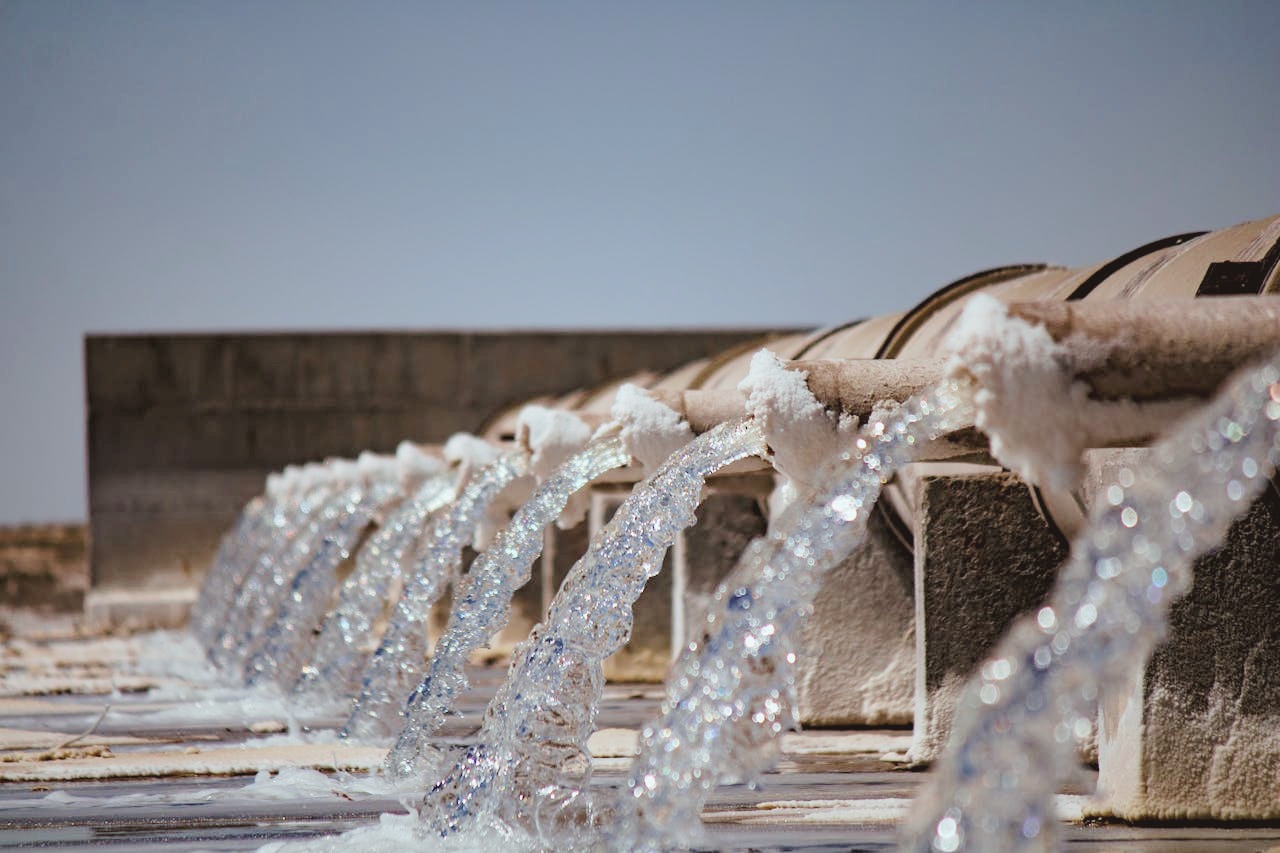
An IWPP is a co-generation facility that produces electricity for the national grid and uses the resulting waste thermal energy to desalinate seawater. This integration achieves 20–40% greater energy efficiency than constructing separate standalone power and water facilities. You solve two problems with one plant.
How It Works in Practice
Prince Charles Offokaja, Director General of the Offokaja Foundation, explains the operational reality:
“In a standard IWPP configuration, only 5% to 15% of total electrical output is consumed by plant operations—the pumps, fans, and the reverse osmosis desalination process itself. The remaining 85% to 95% is exported directly to the national grid. A 2,000 MW IWPP would therefore deliver approximately 1,700 to 1,900 MW of new, reliable power to the Nigerian economy while simultaneously producing millions of liters of potable water every single day. This is not a trade-off between water and power. This is a force multiplier for national development.”
Infrastructure Component: The National Water Backbone
The desalinated water would be distributed via a high-pressure, dedicated pipeline network designed with four clear objectives:
1. Supply coastal states facing critical groundwater salinization.
2. Deliver water to inland states with geological or topological barriers to groundwater extraction.
3. Provide a drought-resistant supply to northern states affected by advancing desertification.
4. Enable strategic, metered water transfer to the Lake Chad Basin for long-term ecological replenishment.
Designing for Public Health: Magnesium-Selective Nanofiltration
Building the infrastructure is only half the challenge. The water it delivers must actively support public health, not merely meet a minimum safety standard. This is why the Foundation recommends a forward-looking design requirement for all future IWPP tenders.
Every tender should mandate the integration of magnesium-selective nanofiltration (MSNF) within the post-treatment phase of the plant. In simple terms, this technology captures magnesium directly from the seawater intake during the desalination process and retains it in the finished drinking water.
The benefits are transformative:
· Preventative Medicine at Scale: Magnesium is essential for cardiovascular health, yet many Nigerian diets are deficient in this mineral, contributing to hypertension and heart disease. Delivering magnesium through the public water supply turns every tap into a low-cost, population-wide health intervention.
· Cost Efficiency: Traditional chemical supplementation—adding magnesium back into desalinated water after treatment—is expensive and logistically complex, requiring continuous supply chains and storage. Capturing magnesium at source through MSNF costs roughly one-tenth as much.
· Supply Chain Independence: By eliminating reliance on imported chemical additives, the system insulates Nigeria’s water supply from global price volatility and logistical disruptions.
This “design-in” approach ensures that the next generation of Nigerian desalination infrastructure serves as a tool for preventative medicine, not just a source of bulk water. It future-proofs the National Water Backbone against both health and supply chain risks.
3. International Precedent: This Has Been Done Before
Nigeria is not being asked to gamble on experimental technology. The systems we propose are mature, operational at continental scale, and have transformed water security in nations facing far harsher climates than our own.
Saudi Arabia
The world’s largest producer of desalinated water, generating over 11.1 million cubic meters daily. Critically, Saudi Arabia operates over 8,400 kilometers of dedicated water pipelines transporting water from the coast to the inland capital, Riyadh. This is the proof of concept for long-distance, high-volume water transfer from Nigeria’s coast to its interior.
Israel
Facing the ecological decline of the Sea of Galilee—a freshwater lake of immense historical and strategic importance—Israel constructed the “Reverse Carrier” project. This initiative pumps desalinated water from the Mediterranean Sea uphill to replenish and stabilize the lake. The direct parallel to a Lake Chad replenishment strategy could not be clearer.
4. Strategic Advantages and Economic Rationale
Fuel Security: Turning Waste into Wealth
IWPPs require a stable energy source. Nigeria possesses a unique and currently wasted asset: flared natural gas. Redirecting even a fraction of the gas currently burned off in the Niger Delta to coastal IWPPs transforms an environmental liability and economic loss into a secure, low-cost strategic fuel supply. This single decision insulates the project from volatile imported diesel prices and dramatically lowers the long-term cost of water.
Economic and Social Returns
This is an investment, not an expense. The returns accrue across multiple sectors:
· Employment: Each major IWPP complex will generate several thousand direct construction jobs and between 300 and 500 permanent, high-skilled operational positions. Pipeline construction creates additional employment along entire corridors.
· Public Health: The provision of WHO-standard potable water eliminates waterborne pathogens and reduces hypertension linked to long-term consumption of saline borehole water.
· Agricultural Productivity: Reliable water supply for irrigation and livestock decouples food production from the unpredictability of seasonal rainfall.
· Productivity Gains: Millions of lost person-hours—currently spent walking for water or waiting for power to return—are reclaimed for education, commerce, and family life.
5. Financing Structure
Recommended Model: BOOT (Build-Own-Operate-Transfer)
This framework aligns with global best practices for large-scale desalination infrastructure. It protects the public purse while ensuring private sector efficiency:
1. Build: A private consortium finances and constructs the IWPP and associated pipeline infrastructure.
2. Own: The consortium owns and operates the asset for a defined concession period, typically 20 to 25 years.
3. Operate: The consortium sells water and power under long-term Power Purchase Agreements (PPA) and Water Purchase Agreements (WPA) with the Federal Government or designated off-takers.
4. Transfer: At the conclusion of the concession, full ownership and operational control transfer to the Government of Nigeria at no additional cost.
Potential Capital Sources
· International Development Finance Institutions: World Bank, African Development Bank, Islamic Development Bank.
· Bilateral Partners and Export Credit Agencies: French Development Agency (AFD).
· International Water Infrastructure Operators: Veolia, Suez, IDE Technologies, ACWA Power.
· Domestic Institutional Investors: Nigerian pension funds and sovereign investment vehicles (via infrastructure bonds).
Revitalizing the Partial Risk Guarantee (PRG) Framework
Capital is available globally for bankable infrastructure. The critical task is making Nigeria’s IWPP projects bankable. Here, the nation does not need to invent a new instrument. It needs to revitalize one that has already proven its worth.
Nigeria’s landmark Independent Power Projects (IPPs) succeeded in large part because of the Partial Risk Guarantee (PRG) framework. This institutional model provides essential credit enhancements that protect private investors and lenders against specific government-related risks—such as contractual breaches, payment defaults, or regulatory changes.
For IWPPs, the PRG model is a natural fit:
· De-risking High-Capital Requirements: IWPPs are capital-intensive, with upfront costs running into billions of dollars. A PRG backed by multilateral development institutions or bilateral partners gives commercial lenders the confidence to commit long-term financing at affordable rates.
· Restoring Long-Term Bankability: The co-located nature of IWPPs—producing both water and power—creates a more robust revenue stream than standalone facilities. A PRG framework recognizes this structural advantage and translates it into lower risk premiums.
· Institutional Memory and Credibility: Nigeria has done this before. The PRG model is not theoretical. Revitalizing it for IWPPs signals to global capital markets that the country is building on proven institutional capacity rather than starting from scratch.
The Foundation recommends that the Federal Government, through the Ministry of Finance and the Central Bank of Nigeria, work with multilateral partners to revive and adapt the PRG framework specifically for IWPP desalination projects under the National Water Backbone program.
6. Brine Management and Circular Economy Potential
Desalination produces a concentrated saline byproduct known as brine. Responsible management is essential, and the Foundation recommends a dual-track approach that turns a potential waste stream into an economic opportunity.
Track A: Economic Valorization
Where geography permits, IWPP facilities should be co-located with solar evaporation salt farms. This transforms brine into two revenue-generating subsectors:
· Artisanal Sea Salt: Premium salt production for culinary and industrial markets.
· Brine Mining: Extraction of commercially valuable minerals including magnesium, potassium, and potentially lithium.
Track B: Deep Ocean Disposal
Where co-location is not feasible, brine is returned to the ocean via sub-thermocline outfalls equipped with diffuser technology. This ensures rapid mixing and dilution within safe environmental parameters. This is standard, regulated practice in global desalination operations worldwide.
7. Calls to Action
To the Executive Branch (Federal Government of Nigeria)
1. Declare: Classify IWPP desalination as a National Priority Infrastructure Project under the Infrastructure Concession Regulatory Commission (ICRC) Act.
2. Budget: Allocate funding for pilot project preparation and viability gap funding in the 2027 National Budget and the 2027–2029 Medium-Term Expenditure Framework (MTEF).
3. Structure: Authorize the Ministry of Finance and the ICRC to commence formal PPP procurement for coastal IWPP pilot projects.
4. Coordinate: Instruct the Ministry of Foreign Affairs to initiate technical and diplomatic consultations with Lake Chad Basin Commission member states regarding a coordinated water transfer framework.
5. Plan: Commission a National Pipeline Corridor Study to secure rights-of-way for the National Water Backbone before competing land uses foreclose options.
To the National Assembly (Senate and House of Representatives)
1. Legislate: Introduce and pass a Bill to establish a National Desalination Authority with a clear mandate for regulation, procurement oversight, and tariff setting.
2. Incentivize: Enact legislation providing full import duty waivers and tax holidays for IWPP equipment, reverse osmosis membranes, and energy recovery devices.
3. Oversee: Direct the Joint Committees on Water Resources, Power, and Finance to hold public hearings and produce a binding roadmap for IWPP deployment within 180 days.
To the Media and the Nigerian Public
This policy shift requires sustained public attention. The media must move beyond reporting the daily hardships of water scarcity and begin scrutinizing the policy response—or lack thereof— to this enduring crisis. The public must hold elected representatives accountable for moving this initiative from a policy brief to a construction site. Your voice is the ultimate catalyst for action.
8. Conclusion
The Prince and Princess Charles Offokaja Foundation assesses that Integrated Water and Power Plant (IWPP) desalination represents the highest-leverage, most technically mature, and financially viable intervention available to simultaneously address Nigeria’s water insecurity and power deficit.
The Atlantic Ocean is Nigeria’s largest and most reliable aquifer. The natural gas currently flared is a wasted national endowment that can power this transformation. The engineering is proven. The financing models exist.
What remains is the political will to execute.
The Foundation stands ready to provide technical advisory support, model concession agreements, and legislative drafting assistance to the Federal Government and the National Assembly.
The time for bold, decisive action is now.
The Prince and Princess Charles Offokaja Foundation
March 2026
#IWPPDesalinationForNigeria #WaterForAll #PowerForAll